What Is the Khumbu Icefall?
The Khumbu Icefall is one of the most complex and dangerous sections of Mount Everest, located directly above Everest South Base Camp on the Nepal side of the mountain. It sits between Base Camp (5,364 m / 17,598 ft) and Camp 1 (around 6,065 m / 19,900 ft) and forms the very first major obstacle for anyone attempting Everest via the southern route. There is no alternative path—every climber from Nepal must cross the Icefall, often multiple times, during an expedition.
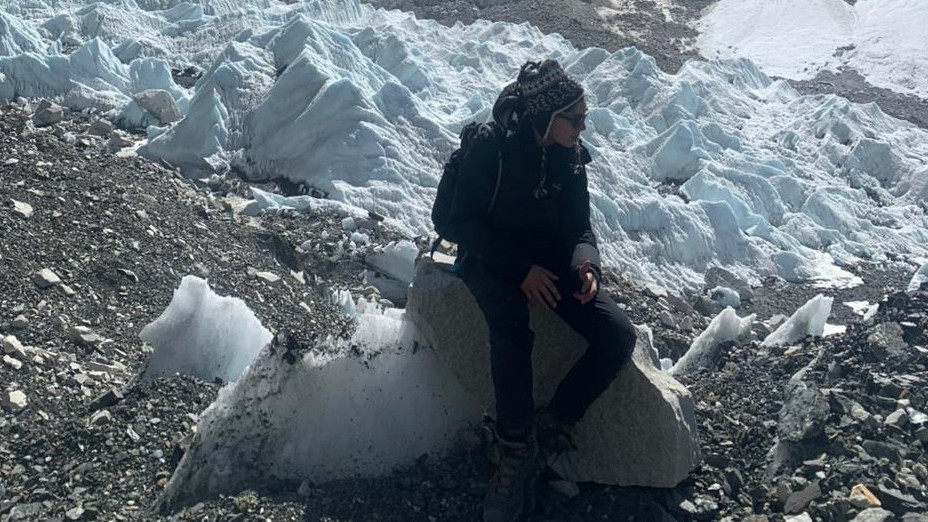
What makes the Khumbu Icefall especially dangerous is that it is not solid ground. It is a constantly moving glacier, flowing downhill at an estimated rate of up to 1 meter (3 feet) per day. As the ice shifts under its own massive weight, it breaks apart, crashes into itself, and reforms in unpredictable ways. This movement creates towering blocks of ice called seracs, some standing as tall as 30 meters (100 feet), stacked unevenly like unstable buildings.
At the same time, the glacier opens deep cracks in the ice known as crevasses. These crevasses can range from a few feet wide to over 10 meters (30+ feet) and can plunge hundreds of feet deep into the glacier. To cross them, climbers must use aluminum ladders, sometimes crossing two or three ladders in a row, suspended over open space.
Unlike a normal trail or snow slope, the Khumbu Icefall never stays the same. A route that appears stable in the early morning can become unsafe by afternoon due to rising temperatures. As the sun warms the ice, movement accelerates, increasing the risk of collapses. Because of this, most crossings are done between midnight and early morning, when colder temperatures temporarily slow the glacier’s movement.
Throughout the climbing season, the Icefall route must be constantly maintained. Specialized Sherpa teams known as the Icefall Doctors work daily to fix ropes, reposition ladders, and reroute paths around newly formed hazards. Over a typical expedition, climbers may pass through the Icefall 4 to 6 times, increasing cumulative exposure to risk.
Because of its constant motion, towering ice formations, deep crevasses, and lack of warning before collapse, the Khumbu Icefall is often described as a living obstacle rather than a fixed trail. Climbers are not simply walking across ice—they are navigating a glacier that is actively cracking, shifting, and reforming beneath their feet. This relentless unpredictability is why the Khumbu Icefall remains one of the most feared sections of Mount Everest, even among the world’s most experienced mountaineers.
Why Is the Khumbu Icefall So Dangerous?
The danger of the Khumbu Icefall comes from one word: unpredictability.
The ice is always moving. Seracs can collapse without warning. Crevasses can widen overnight. Ladders placed one day may need repositioning the next. Even experienced climbers cannot fully control or predict what will happen there.
Some of the main risks include:
- Falling ice blocks
- Deep crevasses hidden under snow
- Narrow ladders suspended over cracks
- Ice towers collapsing suddenly
- Exhaustion at high altitude
Unlike other sections of Everest, the Icefall doesn’t allow slow, careful progress. Climbers must move efficiently, because the longer you stay there, the greater the risk.
How Climbers Cross the Icefall
To make the Icefall passable, Sherpa Icefall Doctors—highly skilled and experienced climbers—work before and during the climbing season to set a route.
They:
- Place aluminum ladders across crevasses
- Fix ropes along safer paths
- Regularly adjust the route as the glacier shifts
Even with these preparations, crossing the Icefall is mentally and physically demanding. Climbers wake up very early—often around midnight or 1 a.m.—to cross it during the coldest hours of the day, when the ice is slightly more stable.
There is no sightseeing here. No pauses for photos. The goal is simple: get through safely.
Why Sherpas Are the True Heroes Here
The Khumbu Icefall makes one truth very clear: no Everest expedition succeeds without Sherpas. This section of the mountain is where their role becomes most visible—and most dangerous.
While most climbers cross the Khumbu Icefall only two to four times during an entire expedition, Sherpas may cross it 20 to 30 times or more in a single season. Each crossing is done while carrying heavy loads, often weighing 20–30 kilograms (45–65 lbs), including tents, oxygen cylinders, food supplies, ropes, ladders, and climbing equipment. Every trip through the Icefall carries the same level of risk, no matter how experienced someone is.
Sherpas are responsible for preparing the route before climbers ever step onto it. Specialized Sherpa teams, commonly known as the Icefall Doctors, enter the Icefall first—often weeks before summit attempts begin. They carefully study the glacier, identify safer lines, place ladders across crevasses, fix ropes along unstable sections, and constantly adjust the route as the Icefall shifts. This work continues daily throughout the season because the glacier never stops moving.
What makes this work extraordinary is not just physical strength, but deep local knowledge. Sherpas grow up in the Khumbu region and develop an intimate understanding of mountain conditions—how ice behaves, how weather changes, and how altitude affects the body. Many Sherpas can sense danger long before it becomes visible, recognizing subtle signs such as ice sounds, cracks, or shifts that outsiders might miss.
Despite facing the highest risks on the mountain, Sherpas rarely seek recognition. Their motivation is rooted in responsibility—to their teams, their families, and their communities. For many, mountaineering work supports education, healthcare, and infrastructure in remote Himalayan villages. This sense of purpose drives them to return to the Icefall again and again, even knowing the dangers it holds.
The Khumbu Icefall has claimed many lives over the decades, and Sherpas have borne the greatest loss. Yet they continue to work there with professionalism, courage, and quiet determination. Calling Sherpas the backbone of Everest is not a metaphor—it is a reality. Without their skill, experience, and repeated exposure to danger, navigating the Khumbu Icefall safely would be nearly impossible, and Everest expeditions as we know them simply would not exist.
Accidents and Reality
The Icefall has been the site of many serious accidents over the years, including avalanches and ice collapses. These events have shaped how climbers view Everest and have led to important conversations about risk, responsibility, and respect for those who work on the mountain.
Because of this history, many climbers say the Icefall is the most mentally challenging part of Everest—not because it’s technical, but because you must accept that some factors are beyond control.
Is the Khumbu Icefall Always Part of the Everest Climb?
Only climbers approaching Everest from the South (Nepal) side must cross the Khumbu Icefall. Those climbing from the North (Tibet) side do not encounter it, which is one reason some climbers consider that route less dangerous in terms of objective hazards.
However, each route has its own challenges, and no Everest route is risk-free.
Why the Icefall Commands Respect
The Khumbu Icefall represents something deeper than danger. It’s a reminder that Everest is not a controlled environment. No matter how advanced equipment becomes, nature still decides the rules.
Many climbers say that every successful crossing of the Icefall is a small victory—and every safe return through it feels like a gift.
It teaches humility quickly.
Final Thoughts
The Khumbu Icefall is not dangerous because it is dramatic or extreme-looking. It is dangerous because it is alive—constantly shifting, never fully predictable, and indifferent to human ambition.
For anyone attempting Everest from the south, the Icefall is the true gateway to the mountain. It is crossed with focus, respect, and quiet determination.
Everest’s summit may be the goal, but the Khumbu Icefall is the test.
And those who pass through it safely understand something important:
On Everest, courage is not about fearlessness—it’s about moving forward with respect.